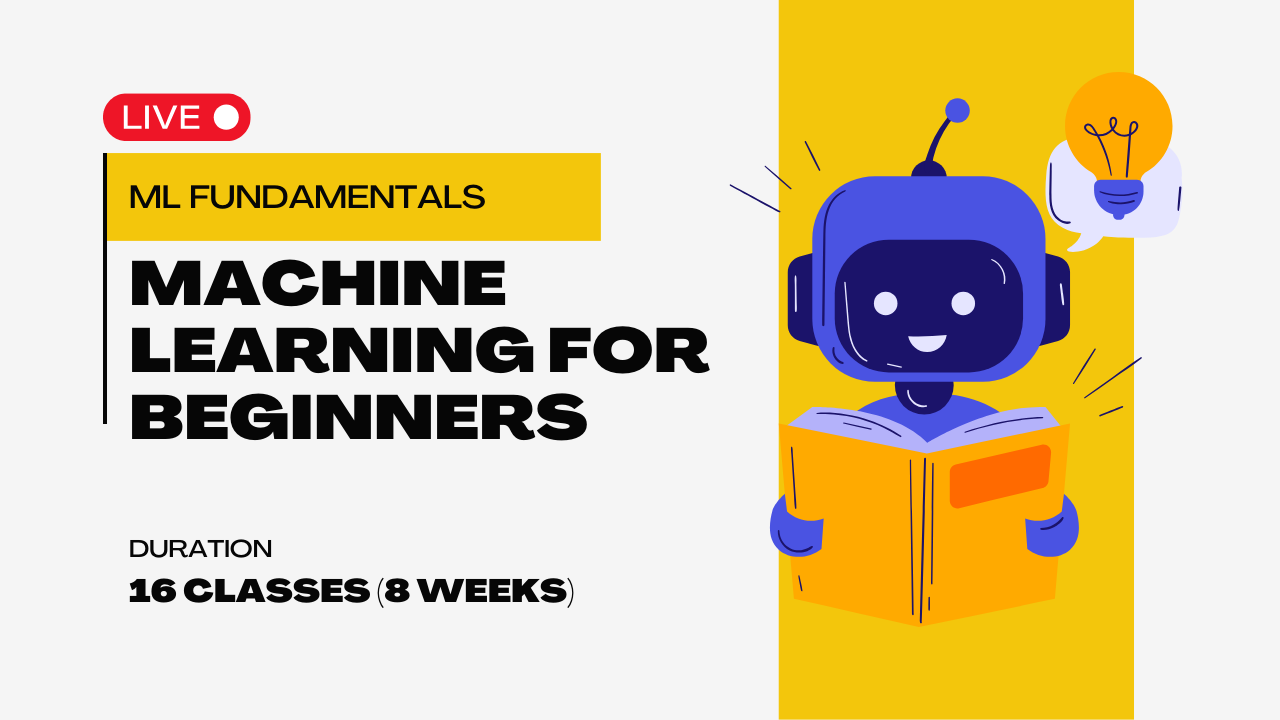
Master the basics of modern machine learning with expert-led case studies. Build your skills through real projects like prediction, classification, clustering, and smart search using Python and practical tools.
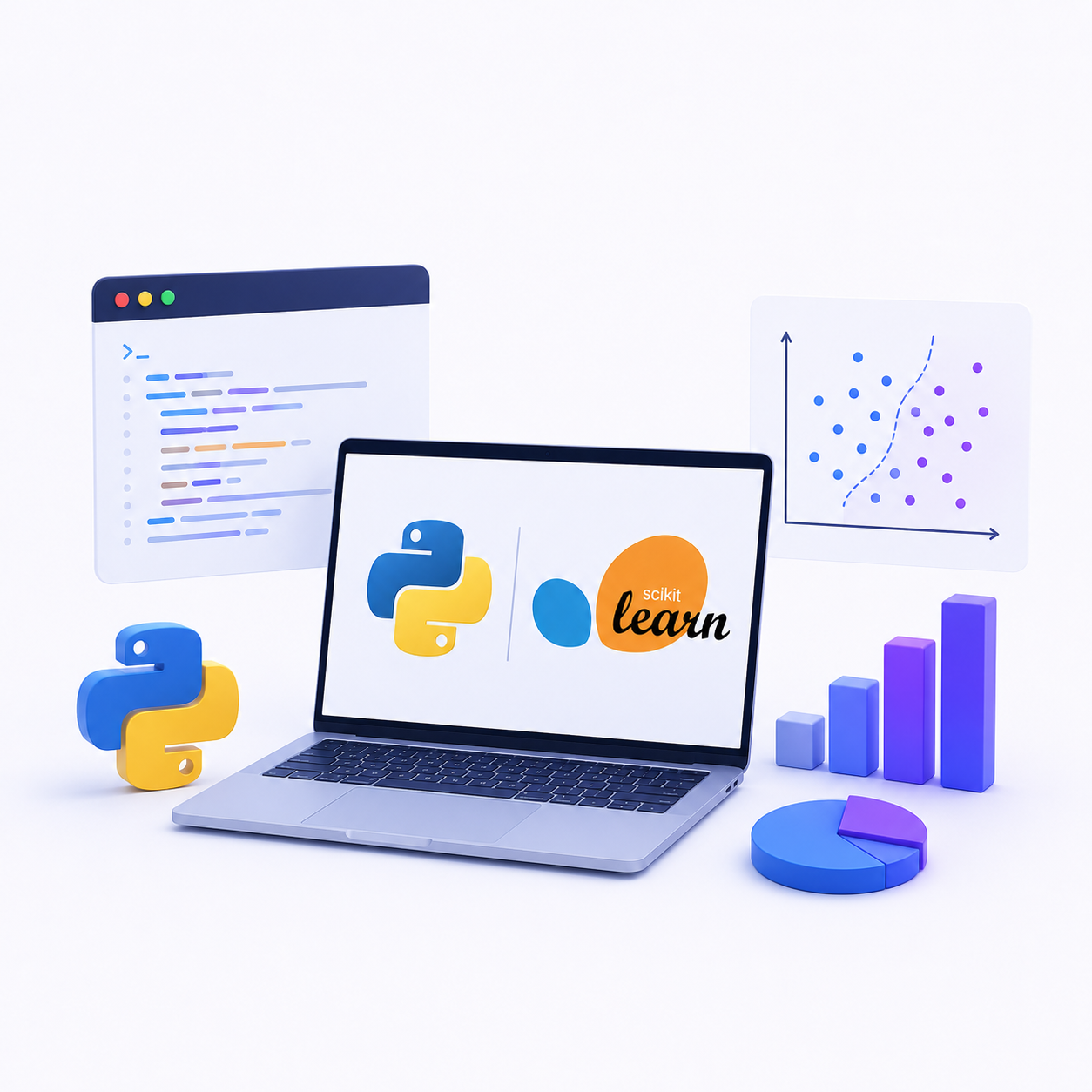
Machine learning powers smart technology everywhere—from apps to online recommendations. This course series makes it simple: learn the main ideas, build hands-on projects, and see how machine learning works in the real world.You’ll start by exploring how computers learn from data, then quickly move into building models that can predict outcomes, sort information, find patterns, and retrieve data. You’ll use Python and popular libraries like scikit-learn and TensorFlow—no advanced math or experience needed.Lessons are delivered through easy-to-follow case studies, working directly with real data. By the end, you’ll be able to use machine learning tools to create your own smart apps and solve real problems.
Basic familiarity with Python programming can be an added advantage, as it helps learners understand examples and practice exercises more easily. However, even those with limited experience can follow along with proper guidance. There is no requirement for advanced mathematics, as all concepts are explained in a simple and practical manner. Learners should have a genuine interest in exploring and solving problems using data, as this course focuses on real-world applications. Most importantly, students should be willing to learn by doing, actively participating in hands-on tasks, experiments, and practice activities to build confidence and understanding step by step.
Overview and Concepts
Learn core ideas behind machine learning, including how systems learn from data and improve over time.
Case Study Approach
Discover how real-world case studies are used to connect theory with practice.
Types of Learning
Get introduced to supervised, unsupervised, and reinforcement learning.
Data Fundamentals
Understand what makes a good dataset and how to identify key variables.
Data Cleaning Techniques
Handle missing values, remove outliers, and prepare data for machine learning.
Visualization & Insights
Use tools like Matplotlib and Pandas to explore patterns and trends visually.
Regression Basics
Grasp how regression is used to forecast numbers and continuous outcomes.
Model Building
Create simple linear regression models to predict housing prices or sales data.
Evaluation Metrics
Measure model accuracy using metrics like MAE, RMSE, and R².
Categorizing Data
Train models to classify data into distinct categories such as spam vs. non-spam.
Algorithms in Action
Implement logistic regression, k-nearest neighbors, and decision trees.
Practical Applications
Work on mini-projects like sentiment analysis or loan default prediction.
Grouping Unlabeled Data
Learn how clustering algorithms uncover hidden patterns in data.
Popular Techniques
Experiment with K-Means, DBSCAN, and hierarchical clustering methods.
Real Use-Cases
Apply clustering to customer segmentation or document organization.
Simplifying Complex Data
Understand why reducing data dimensions improves model performance.
Feature Selection & Extraction
Use techniques like PCA (Principal Component Analysis) to identify important features.
Practical Lab
Refine a dataset to improve speed and accuracy of your models.
Model Tuning
Apply hyperparameter tuning to improve your model performance.
Cross-Validation
Learn best practices for validating results and preventing overfitting.
Performance Comparison
Compare different models and choose the most effective one for your task.
End-to-End Machine Learning Pipeline
Integrate data preparation, model training, and evaluation in one complete workflow.
Model Deployment
Learn how models are shared or embedded into real-world applications.
Capstone Project
Complete a final case study where you build, test, and present your own ML solution.
Discover more similar content to expand your knowledge and sharpen your skills.
Join viLab — as a student, school partner, or educator.