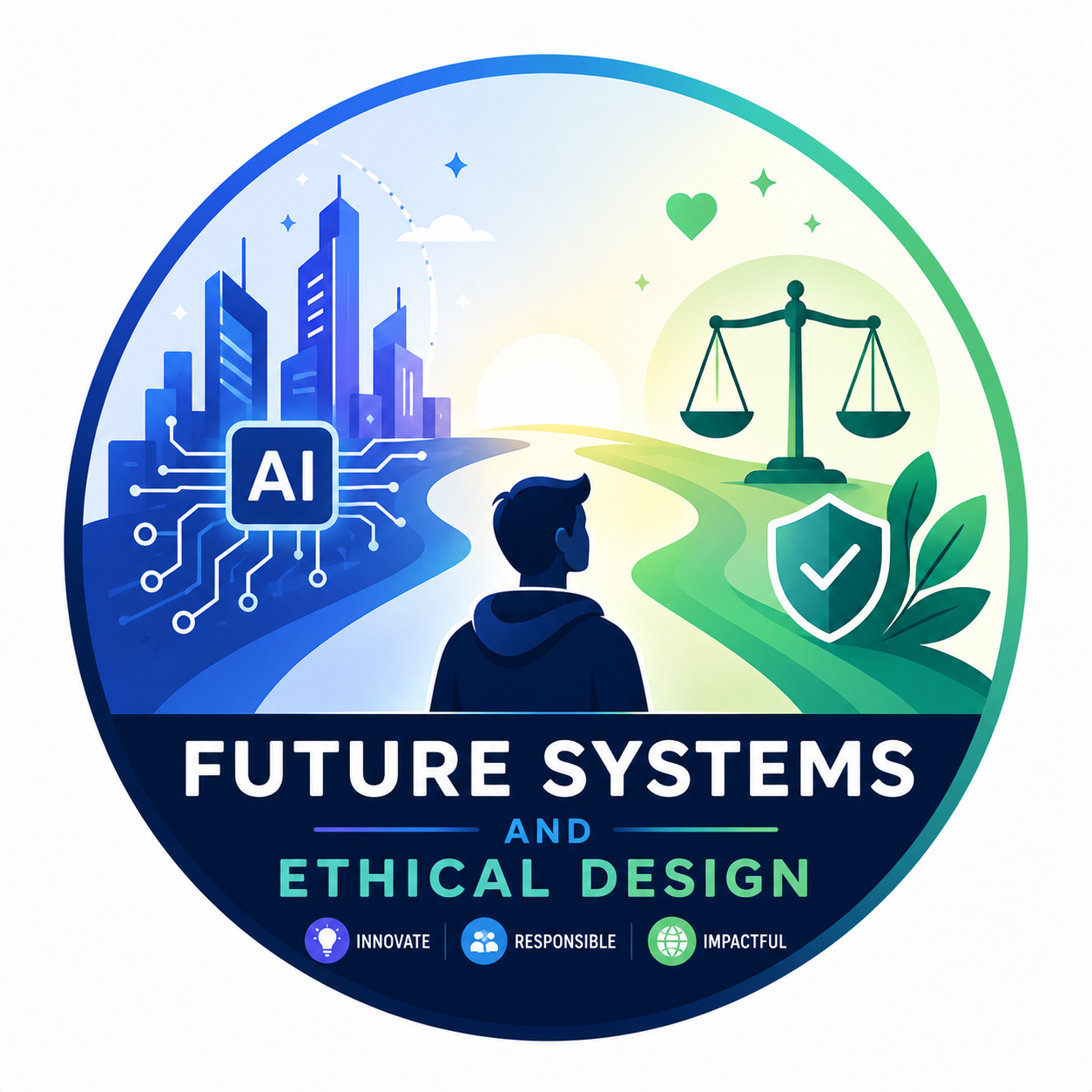
Future Systems and Ethical Design

Explore futuristic systems and learn how to design them responsibly, focusing on human impact, safety, and fairness.

4.5/5
1000+ Students
Advanced
32 Classes (15 weeks)
Available Coaching Centers:
No coaching centers found in this location. Please try another area.

School

₹ 334/class

₹ 456/class

Any Query?

Course Description

Discover how to build the systems of tomorrow with a strong foundation in ethics, safety, and inclusivity.
In this course, you'll delve into innovative technologies and forward-thinking structures that are shaping the future across industries—from transport and communication to energy and automation. As you learn to design these advanced systems, special attention will be given to how your work affects people and communities. You'll explore key principles such as designing with empathy, ensuring user safety, promoting equal access, and minimizing harm. The goal is not just to create what’s possible, but to do so in a way that respects human values and benefits society as a whole.

Technology can change the world, but it must be built responsibly. In this course, students will explore future systems like smart cities, healthcare tech, and self-service platforms. They'll learn how to design systems that are ethical, inclusive, and safe for all. The course encourages students to ask tough questions and build with care.

What You Will Learn:

  • What makes a system ethical or harmful
  • Balancing user needs with safety and fairness
  • Understanding long-term effects of systems
  • Designing for inclusivity
  • Evaluating existing technologies

*Fairness, safety, and responsibility
*Past mistakes in tech design
*Thinking about consequences

*Building systems for real people
*Thinking about users of all ages and needs
*Avoiding bias

*Budget, materials, and energy use
*Building sustainable systems
*Avoiding waste and overload

*Smart cities, traffic systems, and apps
*What worked and what went wrong
*Lessons learned

*Pick a future scenario (e.g., school, health, shopping)
*Design a responsible system
*Share your thinking and design plan

Aviral-N-Educator

Instructor Photo
  • 0 Instructor Rating
  • 0 Reviews
  • 0 Students
  • 0 Courses
An educator from the Department of Information Technology (IT) plays a crucial role in shaping the next generation of professionals in a rapidly evolving and dynamic field. These educators are responsible for not just imparting knowledge but also inspiring students to think critically, innovate, and apply their skills in real-world scenarios. Below is a general overview of the role and responsibilities of an IT educator:

Nitil Singh

Edtech Mentor and Web Developer !
Instructor Photo
  • 4.9 Instructor Rating
  • 900+ Reviews
  • 1000+ Students
  • 20+ Courses

I am an enthusiastic educator with 3+ year of experience teaching Robotics, STEM and Automation. I specialize in simplifying complex technical concepts, making them engaging and accessible for learners of all backgrounds. My classes blend theory with hands-on projects, helping students understand how robotics shape the world around us. 

Passionate about fostering curiosity and innovation, I am committed to inspiring the next generation of creators and problem-solvers through practical learning and interactive teaching methods.

Educational Qualification - B.Tech - Computer Science Engineering (CSE)

Experience - 3+ Year in Education-Technology (EdTech) and Web Development.

Naivotech Educator Super Admin

Instructor Photo
  • 0 Instructor Rating
  • 0 Reviews
  • 0 Students
  • 0 Courses
Naivotech Educator Super Admin

Leave a Review

ai

School

₹ 334/class

₹ 456/class

Any Query?

Course Includes
Lectures
32 Classes
Duration
15 weeks
Level
Advanced
Language
English
Certificate
Yes
Available Coaching Centers:
No coaching centers found in this location. Please try another area.
Course Includes
Lectures
10 Classes
Duration
N/A Hours
Level
Beginner
Language
English
Certificate
Yes

What you need/Requirement

requirement image
Internet

You need a working internet connection to watch videos, join online classes, and get help when needed.

requirement image
Laptop/PC

A personal computer is essential for hands-on practice and project work.

requirement image
Browser

A web browser like Chrome or Firefox is needed to open learning websites and access course content online.

requirement image
English

Basic understanding of English is required, as the course content and instructions are primarily in English

Learning Path

Beginner

Start with fundamental concepts and build a strong foundation.

Intermediate

Expand your knowledge and start building real projects.

Advanced

Dive deep into specialized areas and master complex techniques.

Master

Achieve expert-level proficiency and innovate with your skills.

CERTIFICATION

Earn Valuable Credentials
and Lead with a Competitive Edge.

🛡️

Certificate and Recognition That Validates Your Skills

Our curriculum is meticulously designed in collaboration with industry leaders to ensure every skill you acquire is not just current, but in high demand.

🔗

Get Mentorship From Top 1 % Industry Experts

Our mentors are seasoned professionals and thought leaders who provide unparalleled guidance and personalized feedback.

🧑‍🎓

Network For Lifelong Success

Our vibrant community of professionals offers continuous support, mentorship, and a platform for lifelong career acceleration.

Certificate

Explore Similar Topics

Discover more similar content to expand your knowledge and sharpen your skills.

Discover the World of Future Systems
Understanding technology’s role and designing with ethics for a better tomorrow
1
Explore and Imagine
Dive into the fascinating world of intelligent systems, automation, and future technologies through interactive stories and thought experiments.
2
Build and Create
Use creative design tools and simple simulation activities to explore how systems work, make responsible design choices, and build ethical prototypes.
3
Learn and Showcase
Present your ethical design ideas and future system prototypes, reflect on real-world challenges, and earn your Future Systems Certificate.
Book a free Demo
Go from Curious Thinker to Ethical Designer
01
Discover the World of Future Systems
The journey begins with your first live session. You’ll explore how modern systems — from smart homes to self-driving cars — work together and how human decisions shape technology’s future.
02
Understanding Systems Thinking
Through stories and interactive models, you’ll learn how different parts of a system connect and depend on each other. You’ll practice thinking like a designer who sees the “big picture.
03
Exploring Ethics in Technology
Next, you’ll dive into questions about fairness, safety, and responsibility in technology. You’ll discuss examples of good and bad tech design and how ethical thinking creates better systems.
04
Designing with Purpose
Now it’s time to create! You’ll use design tools, brainstorming games, and teamwork to build prototypes that solve real-world problems while keeping ethical values in mind.
05
Discuss & Showcase Your Creations
In this stage, you’ll present your ethical design projects and explain the choices you made. Together, the group will discuss how responsible innovations can shape a better future.
06
Master the Concepts & Become a Future Innovator
By the end of the course, you’ll think like an ethical designer and systems architect, ready to imagine and build thoughtful technologies for tomorrow.
What Makes This Course Special?
Creative exploration, purposeful design, and guided discussions for young innovators.
Personalised learning
Live Online Classes
Personalised learning
Collaborative Design Challenges
Personalised learning
Systems Thinking Activities
Personalised learning
Ethical Problem Solving
Personalised learning
Real-World Innovation Projects
Personalised learning
1-1 Mentor Guidance

FAQs on Future Systems and Ethical Design

Design choices affect people’s lives. Ethical design helps protect privacy, reduce bias, and build trust from the start, not as an afterthought.

Most professional and certificate programs specify background expectations (e.g., education or work experience) on each course page; beginner tracks usually accept learners without prior domain experience, while advanced tracks recommend relevant exposure.

Program pages typically list a clear duration (weeks or months) and learning hours; many certificate programs are flexible and self paced with structured milestones or live components depending on the course.

Post doubts in the Doubts section or during live classes; mentors reply asynchronously or schedule a live 1:1/Group session if a detailed discussion is required, and doubts are typically resolved within 24–48 hours.

Program pages typically list a clear duration (weeks or months) and learning hours; many certificate programs are flexible and self paced with structured milestones or live components depending on the course.