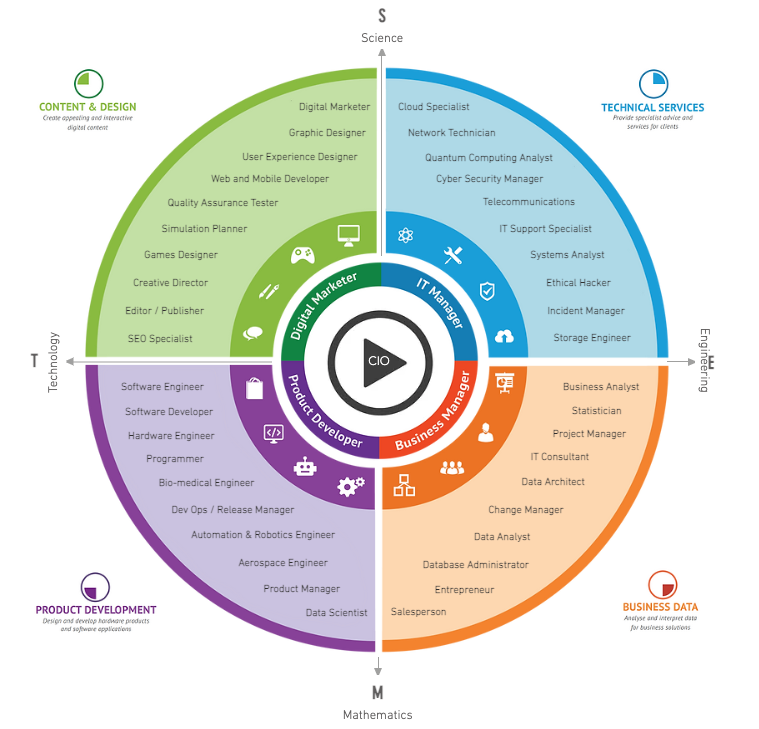
STEM isn’t just about Science, Technology, Engineering, and Mathematics — it’s about nurturing curiosity and creativity. Here’s why every child should experience STEM early and how it can turn learning into discovery.
If you ask a group of children what they want to be when they grow up, you’ll hear answers like “a scientist,” “an astronaut,” or “someone who builds robots.” But if you ask them how what they’re learning in school connects to those dreams, most of them wouldn’t know. That’s where STEM comes in.
STEM stands for Science, Technology, Engineering, and Mathematics — but it’s more than just a combination of subjects. It’s a way of thinking, exploring, and creating. It’s about looking at the world and wondering, “How does this work?” and then actually trying to find out.
When a child asks why the sky changes colors or how a fan spins, STEM is what encourages them to go beyond reading the answer — to experiment, observe, and discover it themselves. It turns learning into something alive, something they can touch, build, and see in action.
Children are naturally curious, but as they grow older, school begins to focus more on memorizing answers than asking questions. STEM brings that curiosity back. It allows students to learn through doing — by building, coding, designing, and experimenting.
At ViLab, we’ve seen this transformation countless times. A child who once thought science was “boring” lights up the moment their first circuit starts working. They suddenly realize — I made this happen. That’s not just learning; that’s empowerment.
STEM education builds deeper skills — problem-solving, creativity, teamwork, and resilience. These are the qualities our children need most because the world they’re growing into is changing faster than ever. The jobs that exist tomorrow may not even exist today. What will stay relevant are skills like adaptability and innovation — the ability to think differently and create new solutions.
Sometimes, it only takes one small spark — a teacher who says “let’s find out together,” or a student who builds something they didn’t know they could. That’s when learning becomes passion, and a curious child begins to see themselves as a creator.
At ViLab, we believe every child deserves that moment — because when learning feels exciting, students stop asking “Do I have to learn this?” and start asking “What can I build next?”